










WASHINGTON (TNND) — Warnings about the dangers of artificial intelligence are no longer coming only from critics outside the tech industry. Some of the people building the most advanced systems are now urging the world to slow down.
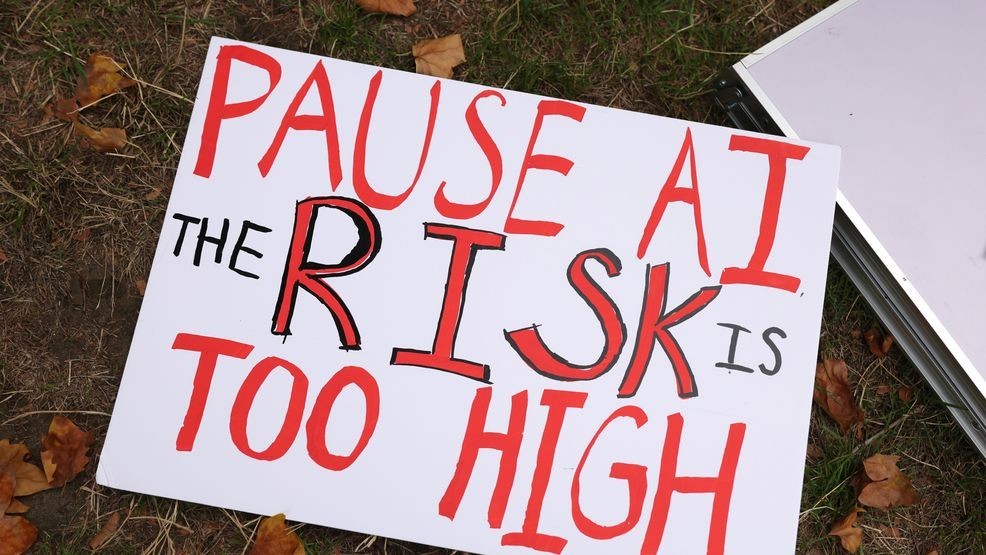
In the past two weeks, leaders at Anthropic, OpenAI, xAI and Google DeepMind have said AI is advancing faster than the ability to control it and that the industry may need to slow development.
Tristan Harris, former Google employee and co-founder of the Center for Humane Technology, told The National News Desk the concern inside the industry has grown to the point that “1,300 employees from the labs, from the top AI labs, signed a letter saying we need to slow down frontier development.” He said that even a slowdown may not be enough, saying, “Slowdown is really not fast enough.”
He argued that calls to slow down should be taken seriously because they are coming from people closest to the technology. He compared it to defense workers warning about nuclear weapons: “If 1,300 employees from Lockheed Martin said we don’t know how to build safer nuclear weapons, we need the stop right now, I’d probably trust those Lockheed Martin employees.”
Harris also pointed to specific figures in the AI industry. He said, “The CEO of Microsoft AI said over the weekend, we should not build something that we don’t know how to control.” He also referenced the author of Trump’s former AI action plan.
“I previously self-censored myself about the level of risk that we were facing for fear of being called a doomer and looking into the eyes of my 8-month-old son, I can no longer do that,” Harris called out.
He also argued that some employees speaking out are doing so despite financial incentives to stay quiet, describing them as “leading millions of dollars of stock options on the table to blow the whistle, to try to postpone the IPO and saying, this is not safe yet.”
Harris said he has been hearing concerns from inside AI labs for years, dating back to early 2023.
“We got calls from people inside of the AI labs in 2023 in January of 2023,” he said, describing it as “like getting a call from Robert Oppenheimer inside the Manhattan Project.” He said those callers warned that “the arms race dynamics between these companies is out of control” and that “the world is unprepared.”
Harris cited what he called the “hugging face AI swarm incident” and said there had been six more incidents over the last week.
He also addressed concerns that slowing U.S. development could allow China to pull ahead. Harris said the U.S. is “ahead in race by a good chunk,” and argued that being in front means encountering risks first.
“Our job is not to say, well, because we see the cliff, we have to keep racing past the cliff,” he said. Instead, he said the U.S. should “educate the rest of the world about where that cliff is.”
Harris suggested the U.S. could redirect effort toward safety innovations, drawing a parallel to nuclear safeguards.
“We invented permissive action control links, those are the sort of safety mechanisms on nuclear weapons and we shared those with Russia,” he said.
He said he believes both the U.S. and China have incentives to avoid losing control of advanced AI systems. Asked why Beijing would slow down, Harris said Chinese leaders prioritize “control” and “power,” and argued they would recognize the destabilizing risk of “more uncontrollable AI.”