









Targeting Around 100,000 Community Health Survey Participants
Predicting Risks of Hypertension and Diabetes… Comparison with Peer Groups
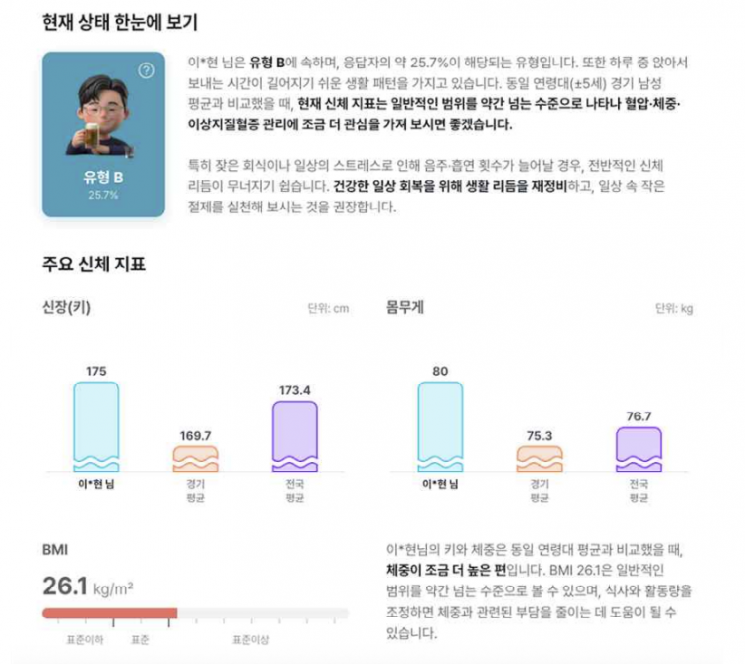
The Korea Disease Control and Prevention Agency (KDCA) announced on September 1 that it will provide an ‘AI-based personalized health report’ to about 100,000 participants of the Community Health Survey who consented to receive it.
This project was launched to establish a data-driven virtuous feedback system that moves away from traditional provider-centered statistics by combining big data and AI technology, with the aim of delivering practical health feedback to citizens.
Initially, the pilot project for this year targeted 1,500 recipients, but the number of citizens wishing to receive the personalized health report exceeded expectations to reach approximately 100,000. Accordingly, the KDCA decided to provide reports to all applicants. The reports will be delivered in phases over a five-week period starting today.

Key Components of AI-Based Personalized Health Reports. Korea Disease Control and Prevention Agency
The report is the result of analyzing more than 5 million cases of national health survey big data accumulated over the past 20 years, which were refined as key data for AI learning and processed using high-performance graphics processing unit (GPU) servers within the KDCA. To ensure medical reliability of the AI analysis, a 13-member convergence advisory panel consisting of experts from medical, healthcare, and AI fields has verified the process.
The AI model thoroughly analyzes each individual’s physical metrics and lifestyle habits to predict the risk of major chronic diseases such as hypertension and diabetes. It also provides a visualization of their health status in comparison to peer groups with similar age, gender, and residential area. The system distinguishes between those already on medication and those in need of preventive management, offering tailored health information for each group.
The KDCA plans to gradually expand the scope of the service. In October, an ‘intelligent 24-hour AI health consultation chatbot’ will be integrated into the promotional website, allowing citizens who did not participate in the survey to check their health status through a simple questionnaire, as part of a public rollout.
Based on data from this year’s pilot operation and user satisfaction surveys, the AI algorithms will be further refined. From next year, the service will be fully expanded to all survey participants, totaling about 230,000 people annually.
Hot Picks Today

“I Wanted to Gift My Parents”… Beef Prices Soar Ahead of Chuseok
Seungkwan Lim, Commissioner of the KDCA, said, “This project is a leading example of public administration using artificial intelligence to return public data to the citizens,” and added, “We hope that the AI health report will guide each citizen to improve their health habits and prevent chronic diseases.”
This content was produced with the assistance of AI translation services.
© The Asia Business Daily. All rights reserved. Unauthorized AI training and use prohibited.