









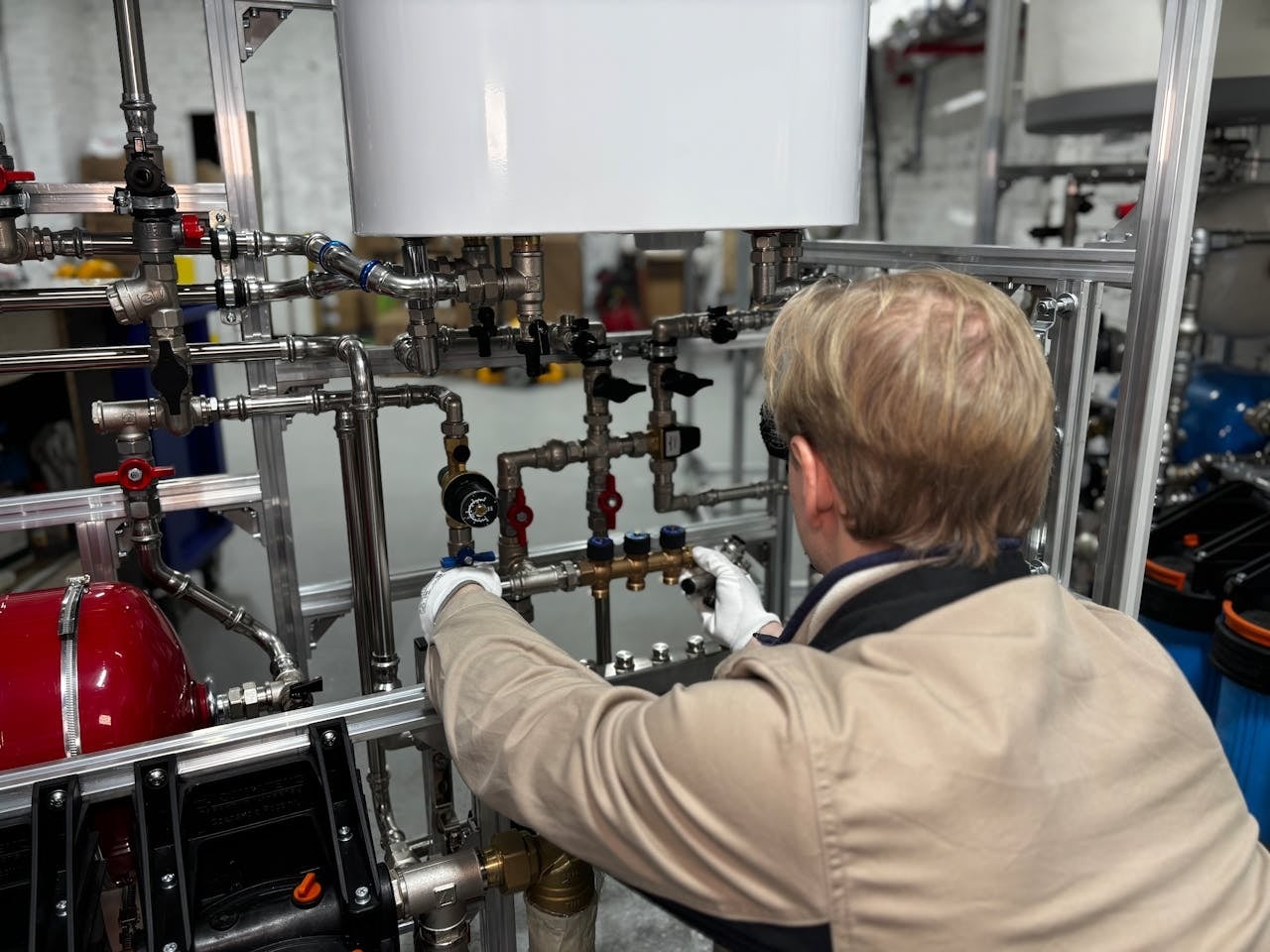
The nurse is safe. The therapist is safe. The plumber is safe. The data entry clerk and the telemarketer are not.
That framing is partially accurate and substantially misleading, because it treats automation as a binary when the reality is a spectrum, and it focuses on job titles when the relevant unit of analysis is tasks and properties.
The most important data point for understanding the real picture comes from PwC’s 2025 Global AI Jobs Barometer, which analysed close to one billion job advertisements from six continents — the most comprehensive labour market dataset assembled for this purpose. Its finding is counterintuitive: wages are rising twice as quickly in the industries most exposed to AI compared to those least exposed. Wages are rising for AI-powered workers even in the most highly automatable roles. The workers most at risk are not those in AI-exposed industries. They are those in AI-exposed roles who have not developed AI skills.
This guide reframes the question. Instead of “which jobs are safe?’, it asks: what structural properties make a job resistant to automation, and how do you evaluate your own role against those properties? The answer is a framework of four properties, a ranked list of roles with documented AI resistance scores, a map of the new jobs AI is creating, and a four-move career strategy that applies regardless of which industry you work in.
The Real Numbers: What AI Is Actually Doing to the Labour Market
The anxiety around AI and jobs is driven by incomplete data. When the full dataset from the most credible sources is assembled, the picture is considerably more nuanced than either the optimists or the catastrophists suggest.
|
170M
new jobs created by 2030 — vs. 92M displaced (WEF, 1,000+ employers)
|
56%
wage premium for workers with AI skills over peers in same role (PwC)
|
78M
net new positions globally from AI transformation (WEF net figure)
|
−0.74
correlation: physical presence and automation resistance (Careery AI Resistance Score)
|
Sources: WEF Future of Jobs Report 2025 (1,000+ employers, 14 million workers, 55 economies); PwC Global AI Jobs Barometer 2025 (close to one billion job ads, six continents); Careery AI Resistance Score research (original, 2026).
The WEF Future of Jobs Report 2025, the most authoritative dataset on this question, surveyed more than 1,000 leading global employers representing 14 million workers across 55 economies. Its central finding: 170 million new jobs will be created by 2030, while 92 million will be displaced — a net gain of 78 million positions globally. The transformation is real and significant. The catastrophe is not.
What is being created and what is being displaced matters as much as the headline numbers. The fastest-growing roles in percentage terms are big data specialists, fintech engineers, AI and machine learning specialists, software developers, and security management specialists. The green transition adds renewable energy engineers, EV specialists, and environmental engineers. The care economy — nursing professionals, social workers, counsellors — is also among the largest growth categories in absolute numbers, driven by demographic ageing.
The fastest-declining roles are uniformly defined by one characteristic: they are rules-based, repetitive, high-volume, and measurable. Cashiers, data entry clerks, administrative assistants, printing workers, basic accounting functions, and scripted customer service agents. What these roles share is not that they are low-skill — some require significant training. What they share is that their core functions are tasks that AI can perform faster, cheaper, and with fewer errors than humans.
Wages are rising twice as quickly in industries most exposed to AI. AI is making workers more valuable, not less — even in the most highly automatable roles.
PwC Global AI Jobs Barometer 2025, close to one billion job ads analysed
The Framework: Four Properties That Determine Automation Resistance
The question “will AI take my job?’ is answered at the task level, not the job title level. Almost every role contains both automatable tasks and tasks that require one or more of the following four properties. The proportion of your role that rests on these properties is the most accurate predictor of your automation exposure. A radiologist’s image interpretation is increasingly AI-augmented; their clinical judgment conversations with patients, their team leadership, and their accountability for treatment decisions are not.
|
#
|
Property
|
What AI cannot do here
|
Protected roles (examples)
|
|
01
|
Genuine emotional intelligence in unpredictable, consequential contexts
|
Detect basic emotions, yes. Truly empathise with real accountability to the human — no. AI cannot read the unspoken, adapt to shifting emotional states in real time, or bear genuine responsibility for emotional consequences
|
Mental health counsellors (97/100 AI Resistance Score), crisis nurses, grief counsellors, palliative care specialists, therapists, social workers, school counsellors
|
|
02
|
Physical presence in variable, fine-dexterity environments
|
The highest single predictor of automation resistance (correlation −0.74). Current robotics cannot economically replicate the dexterity required in unpredictable physical environments
|
Surgeons (96/100), electricians (94/100), registered nurses (93/100), plumbers, HVAC engineers, paramedics, physiotherapists, dentists, construction trades
|
|
03
|
Creative direction and cultural judgment about what deserves to exist
|
AI remixes existing patterns. It cannot make the judgment that something new, counter-cultural, or contextually right deserves to be created. That decision requires taste, risk, and ethical accountability
|
Creative directors (72/100 vs 35/100 for production roles), brand strategists, film directors, editorial leaders, UX strategy, architectural designers making contextual judgments
|
|
04
|
Ethical accountability with real-world legal or moral consequences
|
AI can support decisions. It cannot bear responsibility for them. Roles where being wrong carries legal, financial, or moral liability for a named professional are protected at the accountability layer
|
Judges, senior engineers signing infrastructure certifications, financial advisers with fiduciary duty, doctors with clinical accountability, AI governance specialists
|
Framework synthesised from: Stanford University automation research; Careery AI Resistance Score methodology (original research, 2026); PwC Global AI Jobs Barometer 2025; Oxford Martin School occupational automation susceptibility research (Frey & Osborne); WEF Future of Jobs Report 2025.
Two of these properties deserve particular emphasis because they are least understood. The correlation between physical presence in unpredictable environments and automation resistance (−0.74) is the single strongest predictor identified in Careery’s research — stronger than emotional intelligence, stronger than creativity, stronger than educational level. Skilled trades are among the most structurally protected categories of work precisely because their environments are variable, their physical tasks are dexterous, and the economic case for robotic automation has not closed despite decades of investment in trying.
The fourth property — ethical accountability with real-world consequences — is philosophically important and practically underappreciated. AI systems can support decisions. They cannot bear responsibility for them. The moment a professional decision carries legal liability, regulatory accountability, or moral responsibility for harm to a named human, it requires a named human professional to own it. This is not a technological limitation that will be overcome with better AI; it is a feature of legal and moral systems that are designed around human accountability.
The Ranked List: AI Resistance Scores for 10 Roles
The following table maps ten roles to their AI Resistance Score from Careery’s original research, the primary protective property that accounts for their high score, and their 2025–2030 employment trend. The score runs from 0 (fully automatable) to 100 (structurally resistant). Scores above 90 indicate roles where core functions are very unlikely to be automated within a decade at any economically viable cost.
|
Role
|
AI Resistance Score
|
Primary protective property
|
2025–2030 employment trend
|
|
Mental health counsellor
|
97 / 100
|
Emotional intelligence + accountability
|
Growing: +18% projected by 2030
|
|
Surgeon
|
96 / 100
|
Physical dexterity + ethical accountability
|
Growing: steady demand, AI assists not replaces
|
|
Electrician
|
94 / 100
|
Physical presence in variable environments
|
Growing: +11% by 2030; trades shortage
|
|
Registered nurse (direct care)
|
93 / 100
|
Emotional intelligence + physical presence
|
Growing: +6% by 2030; chronic shortage
|
|
Physiotherapist
|
91 / 100
|
Physical presence + clinical judgment
|
Growing: ageing population driving demand
|
|
Social worker
|
90 / 100
|
Emotional intelligence + ethical accountability
|
Growing: sustained demand across all sectors
|
|
Civil / structural engineer (certifying)
|
88 / 100
|
Ethical accountability + professional liability
|
Stable: certification layer permanently human
|
|
Primary school teacher (mentorship function)
|
85 / 100
|
Emotional intelligence + relational trust
|
Stable: information delivery automating, mentorship not
|
|
Creative director / brand strategist
|
72 / 100
|
Creative direction + cultural judgment
|
Growing: divergence from production roles accelerating
|
|
Cybersecurity analyst (senior)
|
71 / 100
|
Ethical accountability + adversarial pattern recognition
|
Growing: fastest-growing tech role in WEF 2025 data
|
AI Resistance Scores: Careery original research 2026, methodology based on Frey & Osborne (Oxford Martin School), WEF skills data, and BLS occupational projections. Employment trends: US Bureau of Labor Statistics Occupational Outlook Handbook and WEF Future of Jobs Report 2025.
The pattern that emerges from the ranked list is consistent with the four-property framework. The highest-scoring roles share at least two of the four properties, often all of them. The mental health counsellor (97/100) combines emotional intelligence and ethical accountability. The surgeon (96/100) combines physical dexterity and ethical accountability. The electrician (94/100) derives almost all of their protection from physical presence in unpredictable environments — the property with the highest single correlation to automation resistance.
The creative director score (72/100) is intentionally lower than the others, and the reasoning matters. The *execution* of creative tasks — generating options, producing variants, drafting copy — is rapidly becoming AI-augmentable. What remains human is the *direction*: the judgment about which options are right, which aesthetic choices resonate with a specific audience in a specific cultural moment, and which creative risks are worth taking. The score reflects that the protection is at the strategic layer, not the production layer.
|
|
🧠 The physical presence finding every career adviser needs to know
Careery’s research found that physical presence in variable environments is the single strongest predictor of automation resistance, with a correlation coefficient of −0.74 — stronger than emotional intelligence, creativity, or educational level as standalone variables. The economic reason is straightforward: robotic automation of fine-dexterity physical tasks in unpredictable environments remains extraordinarily expensive. A robot that can replace an electrician in a new build cannot replace one rewiring an 80-year-old Victorian terrace. The economic case for automating skilled trades has not closed, and most analysts do not expect it to close within a decade.
|
The Transformation Map: Fastest-Growing and Fastest-Declining Jobs
The WEF Future of Jobs Report 2025 — based on data from the International Labour Organisation covering the 2025–2030 period — provides the most authoritative mapping of which roles are growing and which are declining. The table below assembles the key findings.
|
↑ Fastest growing jobs (2025–2030)
|
↓ Fastest declining jobs (2025–2030)
|
|
Big data specialists (+30%+ in percentage terms)
|
Cashiers and ticket clerks
|
|
AI and machine learning specialists (+27%)
|
Administrative and executive secretaries
|
|
Fintech engineers (+25%)
|
Data entry clerks
|
|
Software and applications developers (+21%)
|
Printing workers
|
|
Security management specialists (+20%)
|
Accountants and auditors (routine functions)
|
|
Renewable energy engineers (+18%)
|
Bank tellers and related clerks
|
|
AI governance and ethics specialists (new category)
|
Stock-keeping and warehouse clerks
|
|
Human-AI collaboration designers (new category)
|
Postal service clerks
|
|
Care economy: nursing, social work, counselling
|
Telemarketers and scripted sales callers
|
|
Green economy: EV, environmental engineering
|
Basic customer service agents (tier-1)
|
Sources: WEF Future of Jobs Report 2025 (based on ILO employment projection data); Goldman Sachs Global Investment Research; WEF fastest-growing and fastest-declining job categories.
The most important pattern in the table is what the growing and declining categories do NOT share. The growing roles are not uniformly high-education or high-technology. Farmworkers, delivery drivers, building construction workers, and shop salespersons are all among the largest growing categories in absolute numbers — because broadening digital access and economic growth in developing markets is driving demand for physical goods, delivery, and in-person service. The declining roles are not uniformly low-skill: accountants, administrative secretaries, and bank tellers are skilled roles with real training requirements. What they share is that their core functions are rules-based, structured, and measurable.
The New Roles: Jobs That Exist Because of AI
The most underreported dimension of the AI and jobs question is the category of roles that AI is creating rather than eliminating — roles that require human judgment specifically because of, not despite, AI’s capabilities. These are among the fastest-growing and highest-compensating categories in the knowledge economy in 2026.
|
New role
|
Why it exists because of AI
|
What makes it human-proof
|
|
AI governance and ethics specialist
|
Every organisation deploying AI at scale needs humans who define the ethical boundaries, audit outputs, and take accountability for consequences
|
Requires ethical judgment, policy expertise, and accountability that resists automation by definition. Gartner: 75% of large organisations will have dedicated AI governance teams by 2026
|
|
Human-AI collaboration designer
|
As AI agents work alongside human teams, someone must design the workflows, interfaces, and protocols that make that collaboration safe and effective
|
Requires deep understanding of both human cognition and AI capability — a combination that currently exists only in trained humans
|
|
Prompt engineer and AI system architect
|
Directing AI systems to produce specific, high-quality outputs for a domain is a skilled practice that requires domain expertise plus AI capability knowledge
|
PwC data: 56% wage premium for AI skills across every industry. The skill accrues value when combined with domain expertise, not in isolation
|
|
AI trainer and domain data curator
|
AI models require expert-annotated training data. You cannot effectively evaluate medical AI outputs without medical expertise; legal AI without legal expertise
|
Domain expertise is the irreplaceable component. The AI cannot train itself on its own domain-specific errors — a human expert must define what good looks like
|
|
Agentic AI supervisor
|
Autonomous AI agents executing multi-step enterprise workflows require human supervisors who define operating parameters, monitor outputs, and intervene when agents deviate
|
30% of enterprises already creating new roles to manage their AI workforce. The oversight layer is permanently human by design
|
Sources: Gartner AI governance team forecast; Gloat AI Workforce Trends 2026; PwC Global AI Jobs Barometer (wage premium data); Cisco agentic AI workforce predictions 2026; 30% of enterprises creating new AI management roles (Multiple enterprise surveys).
The common thread across all five new role categories is the same principle that underlies the four-property framework: AI systems require human judgment at the point where their outputs have real-world consequences, where their errors need expert detection, and where their operating parameters need ethical definition. These are not temporary roles that will exist until AI improves. They are structural features of any system in which AI operates in high-stakes environments — which is where the economic value is, and therefore where AI deployment is accelerating fastest.
The Career Strategy: Four Moves That Future-Proof Any Role
The four moves below are designed for the reader who does not work in healthcare, skilled trades, or law — who works in a role with genuine automation exposure — and needs a practical strategy for navigating the transformation. They apply across industries and seniority levels, because the underlying principle is the same regardless of context: position yourself in the human-valuable part of your role, and build the skills that make you more valuable in an AI-augmented world rather than less.
|
01
|
Map and expand the human-core of your current role
|
Every role contains automatable tasks and tasks that require one of the four properties above. The exercise is to map your own role explicitly. The automatable tasks are the ones you should be using AI to handle right now — both to increase your productivity and to shift your working time toward the tasks that are resistant. The most precarious career position in 2026 is spending most of your day on automatable tasks without using AI to accelerate them. The workers most exposed to displacement are those who are manual about the parts of their role that AI can do better.
|
|
02
|
Develop AI fluency as a layer on top of your domain expertise
|
PwC’s Global AI Jobs Barometer found a 56% wage premium for workers with AI skills over peers in the same occupation without AI skills. Critically, this premium accrues to people who combine domain expertise with AI tool proficiency — not to people who have AI skills without domain expertise. A nurse who uses AI effectively is worth more than a nurse who does not. The AI alone is worth nothing without the clinical judgment. The career strategy is to build AI fluency on top of the expertise you already have, not to replace one with the other.
|
|
03
|
Position yourself as the human-in-the-loop for AI systems in your field
|
The role of evaluating, correcting, and directing AI output in your professional domain is a high-value position that will only grow in importance and in compensation. The doctor who can evaluate an AI diagnostic, identify its error modes, and explain the gap to a patient is more valuable than the doctor who cannot engage with AI systems at all. This is the “human judgment layer” that every high-stakes AI deployment requires by design, by regulation, and by the irreducible fact that AI systems make consequential errors that require human expertise to detect.
|
|
04
|
Accumulate the irreplaceable reputation assets that AI cannot replicate
|
Trust. Relationships. Demonstrated judgment in consequential situations. Professional accountability. These are the career assets that AI cannot replicate because they are built on human experiences, human history, and human accountability to other humans. The barrister with 20 years of courtroom pattern recognition. The therapist whose clients specifically seek them out by name. The engineer whose professional certification carries legal weight. The mentor whose track record of developing talent speaks for itself. These assets compound over time and are structurally protected from automation in a way that no technical skill is.
|
The most important insight that runs through all four moves is the one PwC’s data makes explicit: the workers who will command the highest compensation in an AI-augmented world are not those who avoid AI or those who replace their domain expertise with AI skills. They are those who combine deep domain expertise with genuine AI fluency — who can direct AI systems, evaluate their outputs, identify their error modes, and provide the human judgment layer that gives AI’s speed and scale genuine value. That combination is currently scarce, increasingly demanded, and commanding a 56% wage premium in every industry PwC analysed.
The Right Question Was Never ‘Will AI Take My Job?’
The right question is: what part of my work requires the properties that AI cannot replicate — genuine emotional intelligence, physical judgment in unpredictable environments, creative direction about what deserves to exist, and ethical accountability for real-world consequences — and am I positioned in that part?
For most knowledge workers, the answer requires an honest audit of where their working time actually goes. The workers most exposed to the negative dimensions of AI transformation are those spending the majority of their days on automatable tasks without using AI to accelerate them — neither capturing the productivity gains that AI offers nor building the human-judgment layer that commands the premium. The workers best positioned are those who have already made that distinction, are using AI for the automatable parts of their role, and are investing their human capacity in the properties that AI cannot replicate.
The WEF’s net figure of 78 million new jobs is an optimistic number that rests on a particular condition: that workers, organisations, and education systems can make the transition fast enough to match supply with the new demand. PwC’s finding that wages are already rising fastest in the most AI-exposed industries suggests that for workers who engage with the transition rather than resist it, the trajectory is genuinely positive. The goal is not to find a job AI will never touch. It is to be valuable in exactly the way that AI, for all its capabilities, cannot be.