







From test phase to practical application
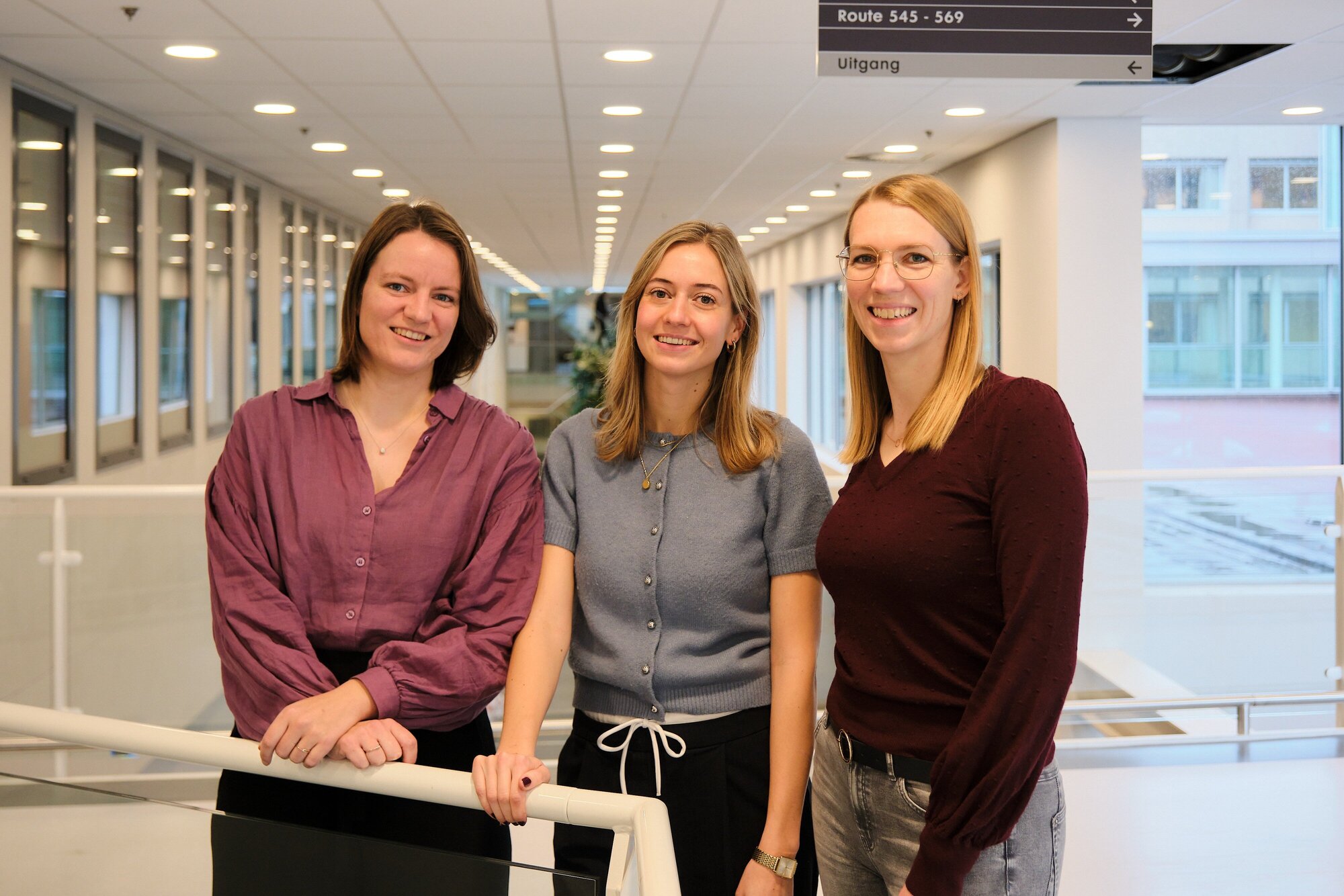
Although the number of AI projects in healthcare is growing, only a small proportion actually end up in clinical practice. This is due to strict regulations. “And rightly so,” says De Vries. “We are talking about human lives.”
“TECHNOLOGY IS MOVING FASTER THAN LEGISLATION. FIRST COMES INNOVATION, THEN THE FRAMEWORK.”
Carlijn Buck
Hopeful signs
Nevertheless, the three see hopeful signs. Within the Catharina Hospital, AI is not only being developed but also tested in collaboration with doctors, the AI Expertise Center, clinical physics, and ICT teams. “That makes all the difference,” says Kortman. “There is a great willingness to experiment here. That’s the only way we can learn how AI can really help.”
Strengthening each other
The three researchers also praise the collaboration within Eindhoven MedTech Innovation Center ( e/MTIC ). In addition to TU/e and Catharina Hospital, Philips, Maxima Medical Center, and Kempenhaeghe are also part of this partnership. “Clinical and technical expertise come together there and reinforce each other. Through this collaboration, we are narrowing the gap between technology and practice,” says Buck.
“YOU LEARN A LOT FROM EACH OTHER THROUGH THE DIFFERENT EXPERTISE. IT REALLY HELPS TO ENSURE THAT INNOVATIONS ARE NOT ONLY RESEARCHED THEORETICALLY, BUT ALSO ACTUALLY APPLIED IN HEALTHCARE PRACTICE. AND THAT HELPS THE PATIENT.”
Maud Kortman