







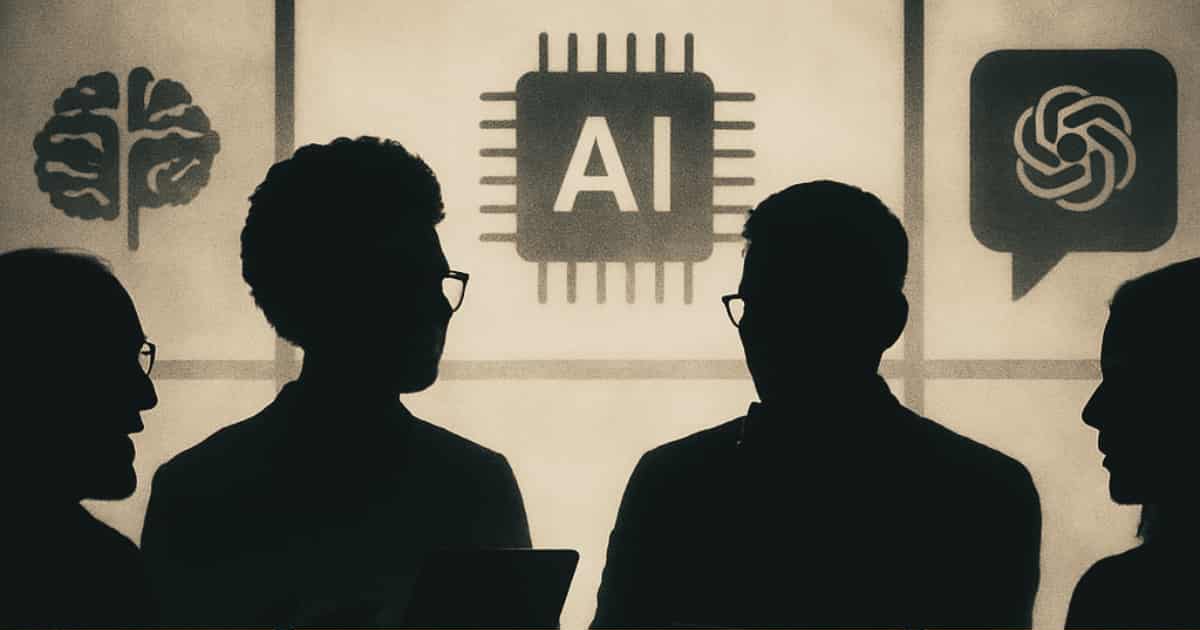
Professors in Indonesia, Malaysia, and the Philippines are calling for clear and consistent guidelines on the use of artificial intelligence (AI) tools in colleges and universities, warning that the rapid adoption of platforms such as ChatGPT has outpaced institutional policies designed to safeguard academic integrity, according to a study published in The Palawan Scientist by Western Philippines University.
The research, which interviewed 22 professors—including 11 from the Philippines—highlights growing concern among educators who say students are increasingly relying on AI-generated content for academic writing, research tasks, and even thesis work. With universities across Palawan expanding digital access and integrating more technology into classrooms, the study emphasizes the urgent need for policies adapted to local realities.
Growing reliance and ethical concerns
Professors said the most common misuse involves students copying assignment questions into ChatGPT and submitting the outputs without verification, a practice that could undermine critical thinking and originality if left unchecked.
“Students cut and paste assignment questions into ChatGPT, and I noticed their information is inaccurate. I double-check and confirm that the content is wrong. Actually, I see, and I already know it’s wrong,” a Malaysian professor with 31 years of experience told the researchers.
– Advertisement –

They also reported declines in student originality and comprehension.
“High dependency on this tool blocks their creative thinking and prevents them from producing their own analyses,” one Indonesian professor said.
These concerns mirror broader debates in Philippine higher education, where teachers have long raised the challenge of maintaining academic integrity amid easy access to digital information.
For universities in Palawan, where research programs are expanding, educators say AI-generated outputs introduce new layers of scrutiny and responsibility.
Professors say banning AI is not the answer
Despite the risks, none of the professors recommended banning ChatGPT. Instead, they recognized its potential to assist both students and faculty when used responsibly.
“For students and teachers, AI is there to make our lives more convenient. I use ChatGPT. So, it is okay with me if students use ChatGPT in thesis or dissertation writing. Again, that is, as long as the content of the AI-generated output has been counterchecked by the students. And when they submit their output, they should have a thorough understanding of what they are submitting,” a graduate school dean in the Philippines said.

Others emphasized that ChatGPT can help students refine their writing, explore concepts, and organize ideas more effectively. However, they stressed that these benefits must be accompanied by strong guidance from educators to prevent misuse.
“Banning ChatGPT will not stop students from using it. What we can do is teach them to use it responsibly, and integrate it into the learning process,” a Palawan-based university professor told Palawan News.
Reliability of AI detectors in academic work
The challenge extends beyond student behavior. Some professors have turned to AI detectors to identify suspected AI-generated papers, only to find the tools themselves unreliable.
“There are cases where some colleagues ran a paper through an AI detector, and it flagged the entire document. The student received a failing grade,” the Palawan-based professor said.
Recent studies support these concerns. A 2023 study published in the International Journal for Educational Integrity tested 12 publicly available detection tools plus two commercial systems and concluded that “available detection tools are neither accurate nor reliable,” noting that many failed to detect AI-generated text or misclassified human-written work as AI-generated (Ippolito et al., 2023).

Another 2023 study evaluating five major AI detectors—including GPTZero and OpenAI’s own detector—found that performance dropped significantly with GPT-4-generated content and that false positives were common, misclassifying human work as AI-generated (Zellers et al., 2023).
A 2024 study examining techniques to bypass AI detection reported that simple paraphrasing or minor edits could reduce detection accuracy by nearly 17 percentage points, highlighting the risk of unfairly penalizing students (Wang et al., 2024).
Consequences: unfair flunks and lost trust
The Palawan-based professor said these shortcomings have tangible consequences. Some students have been flunked or worse, punishedsolely based on AI detector results, even when their work was original.
“Detectors should never replace teacher judgment. They are helpful as a reference, but students should not be penalized solely because a machine flags the content as AI-generated,” he said.
He warned that overreliance on flawed detectors could undermine academic fairness and discourage students, particularly non-native English speakers, from pursuing research- or writing-intensive courses.
Professors demand clear guidelines and protocols
Among educators interviewed by the researchers and Palawan News, the strongest and most consistent recommendation was the need for clear policies on the ethical use of AI.
“Institutions should establish guidelines explaining when and how students may use ChatGPT, including transparency requirements in research writing,” a professor said.
A Philippine research director interviewed in the study emphasized the need for defined limits, particularly when evaluating whether student work relies excessively on AI assistance.
“”Part of the protocols also demands additional work from the professors, such as meticulously examining the submitted outputs, like the thesis and dissertation. This can be done by setting a ‘threshold’ or extent to which AI-generated texts can be allowed, e.g., 5%? 10%?,” it said.
Another informant from Indonesia insisted that training and guidelines must go together.
“They should freely introduce students to ChatGPT… but still teach them the theories of academic writing. This is because ChatGPT cannot always write systematically and appropriately according to thesis-writing principles,” it said.
These calls reflect broader institutional gaps, as many universities in the ASEAN region—including those in Palawan—have yet to adopt or enforce comprehensive AI-use policies.
Other Philippine universities already have AI rules
Several universities in the Philippines have issued their own AI policies, providing frameworks that other institutions can adopt.
“Humans should ultimately remain in control of, and thus morally responsible for, the behavior of AI systems,” the University of the Philippines said, outlining principles for responsible and trustworthy AI use.
UP Open University also requires both teachers and students to declare any use of AI tools.
“Teachers should also declare to their students the extent of AI use allowed or disallowed in learning activities… Students… must declare and properly cite AI-generated content,” the UPOU said.
Far Eastern University updated its academic integrity rules to include generative AI use, noting that the tool should not replace student learning.
“AI has been here for a long time, and FEU welcomes its use as an educational tool. However, it should not serve as a replacement for actual students’ performance. That’s why we needed to come up with a policy highlighting academic integrity, and we also conduct workshops to guide students on the proper use of AI tools,” FEU Senior Vice President for Academic Affairs Maria Teresa Trinidad Tinio said in an interview.
Philippine Normal University requires an “AI Declaration Form” for students and faculty who use AI-assisted tools in coursework, research, or creative outputs, allowing professors to adjust AI-use rules based on the level and nature of the course.
Implications for Palawan’s academic institutions
Professors warned that without clear guidance, student learning may weaken and academic dishonesty may increase.
“AI-generated content poses risks to disciplines central to Palawan’s development, including environmental governance, agriculture, and community-based research, where accuracy and contextual understanding are critical,” the local professor said.
Western Philippines University and Palawan State University, the province’s two largest higher education institutions, are positioned to lead policy development.
“Both schools have growing research programs, and they must establish clear rules that promote responsible AI use while protecting research integrity,” the professor added.
The road ahead
The researchers concluded that ChatGPT’s integration into academic life is “inevitable,” and the challenge now is ensuring its responsible use. They recommended capacity-building programs for faculty and orientation sessions for students so both groups understand the ethical boundaries of AI in research and academic writing.
While the study focused on professors’ perspectives, the authors said future research should examine students’ experiences, especially in regions like Palawan where digital adoption continues to grow.
The full study, Welcoming or Banning ChatGPT in Higher Education: Insights from Indonesia, Malaysia, and the Philippines, appears in the December 2025 issue of The Palawan Scientist, a peer-reviewed journal published by Western Philippines University.
– Advertisement –