







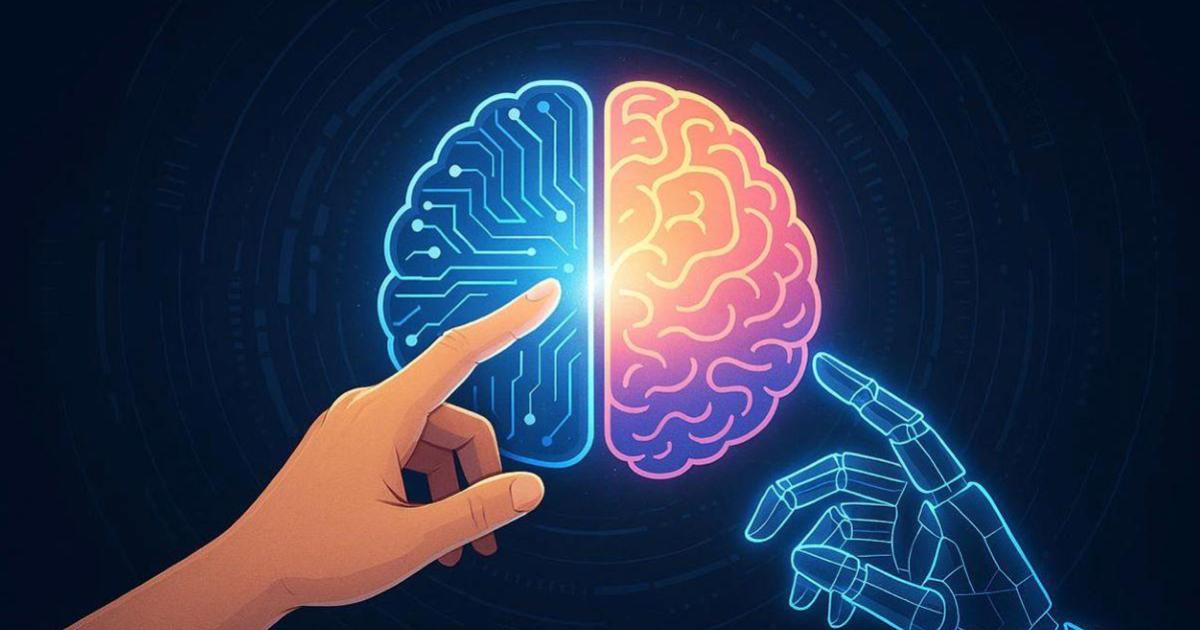
Over the past few years, generative artificial intelligence (AI) has expanded into countless domains and become part of many people’s daily lives. With the rise in efficiency and reach that AI is achieving, concerns have also arisen, especially as it takes an ever larger place in our habits and ways of working.
Teenagers and young adults are particularly fond of it in their day-to-day lives, including their studies, with 75% of Swedish 15- to 24-year-olds stating they have used generative AI in an educational setting. Over half (55%) also carried it out in an unauthorised manner.
The field of education is worried about the subject, and the boundaries between cheating and receiving help from an external source are becoming blurrier. Discussions on how to regulate it have been ongoing across Europe in secondary schools and universities.
Some, like the University of Malta (UM), provide their staff with guidelines on its best use.
The Department of Mathematics and Science Education, Faculty of Education at UM is also part of the Erasmus+ Teacher Academy called ACT-AI, running from 2025 for the next three years.
Based on the data gathered, the end goal is to create a detailed training framework for teachers across the EU, including Malta, to support more sustainable use of AI tools
Its aim is to analyse the various ways students and teachers are already using AI in their learning or teaching experience, together with what is successful and what requires regulation. Based on the data gathered, the end goal is to create a detailed training framework for teachers across the EU, including Malta, to support more sustainable use of AI tools.
Currently entering the second phase of the project, the UM hosted two stakeholder consultations at the end of November to gather the experiences, concerns and advice of education professionals in Malta on the use of AI in a classroom setting.
For the occasion, teachers, student teachers, school leaders, policymakers on AI and education, and academics have been invited to share diverse perspectives and learn from a broad range of experiences.
As AI continues to reshape the field of education, this European initiative underscores the importance of balancing the benefits of advanced AI tools while regulating its use.
Floriane Sawadogo, a French intern at the University of Malta, has contributed to various projects led by the Department of Mathematics and Science Education, including Science in the City, Act-AI, and Unconventional Science Careers.
Photo of the week
 Photo: Elisa Von Brockdorff
Disco and rap music, shining costumes and two energetic artists; this is usually not what you expect from an educational science show. This was exactly what Ensonglopedia, a British science-arts company, presented at Science in the City last September.
Accompanied by songs such as The Relativity Rap about Einstein’s theories of relativity, or Reflect, Refract, Diffract, Repeat about light reflection, John Hilton engaged a young audience in learning dance moves and the basics of science. Forty minutes that went by too fast, leaving parents to go home with children screaming, “Give me E equals MC squared!”.
Sound Bites
• In education, generative AI is used in various fields, including language learning. Chatbots are now being developed to help improve proficiency. While the benefits include tailored learning experiences to the learner’s interests, it can also lead to demotivation when vocabulary is not tailored to the learner’s level.
• AI detectors, which can flag unauthorised AI use, have been proven unreliable. Between 10% and 75% of the time, minimally polished text is mistaken for plagiarism, leading the tool to interpret it as copying a text written entirely with AI. Results also differ depending on the tool used, showing the need to develop efficient tools.
For more soundbites, click on: https://www.facebook.com/RadioMochaMalta.
DID YOU KNOW?
• Generative AI did not emerge recently; it was developed in the 1960s for data generation.
• The release of ChatGPT in late 2022 made the citizens aware of generative AI.
• A BBC study finds that almost 45% of AI-generated news reports contain false information.
• Up to 71% of images used on social media were AI-generated in 2024.
• A recent Eurobarometer survey shows Malta is among the EU’s most optimistic countries about workplace AI, with 75% expressing a positive outlook.
For more trivia, see: www.um.edu.mt/think.